
Companies building the data centers behind AI are increasingly insuring them with insurance firms of their own. Such in-house insurers, known as captives, are, in fact, becoming the go-to model for AI infrastructure as a whole, per global insurance broker and advisory firm Marsh.
And while data centers often represent bigger exposures than insurance firms have previously worked with, thanks to their size and rapid expansion, they also come with additional liabilities the industry has been slow to account for. Per AM Best’s June special report, there were 4,287 data centers operating in the U.S. alone in May 2026, with the current development wave occurring faster than any previous expansion.
The credit rating agency also found considerations including electricity consumption – set to reach 12% of U.S. electricity consumption by 2028 – will make current concerns related to energy demand, utility costs, water usage, mineral requirements and environmental impacts, all the more acute.
It is no coincidence, then, that captives are flourishing. For Marsh alone, the captives it manages wrote $79.1 billion USD in premium in 2025, with 118 new captives formed, up 92 the year prior. That growth came while commercial insurance pricing fell 4%, meaning companies kept moving toward insuring themselves regardless of whether buying insurance was getting cheaper.
Yet, running an insurance company – even a private one – entails answering questions most corporations have never faced, including how much loss to expect and how much cash to hold against it. For the data center boom particularly, where there is little history to learn from, answers are far from obvious.
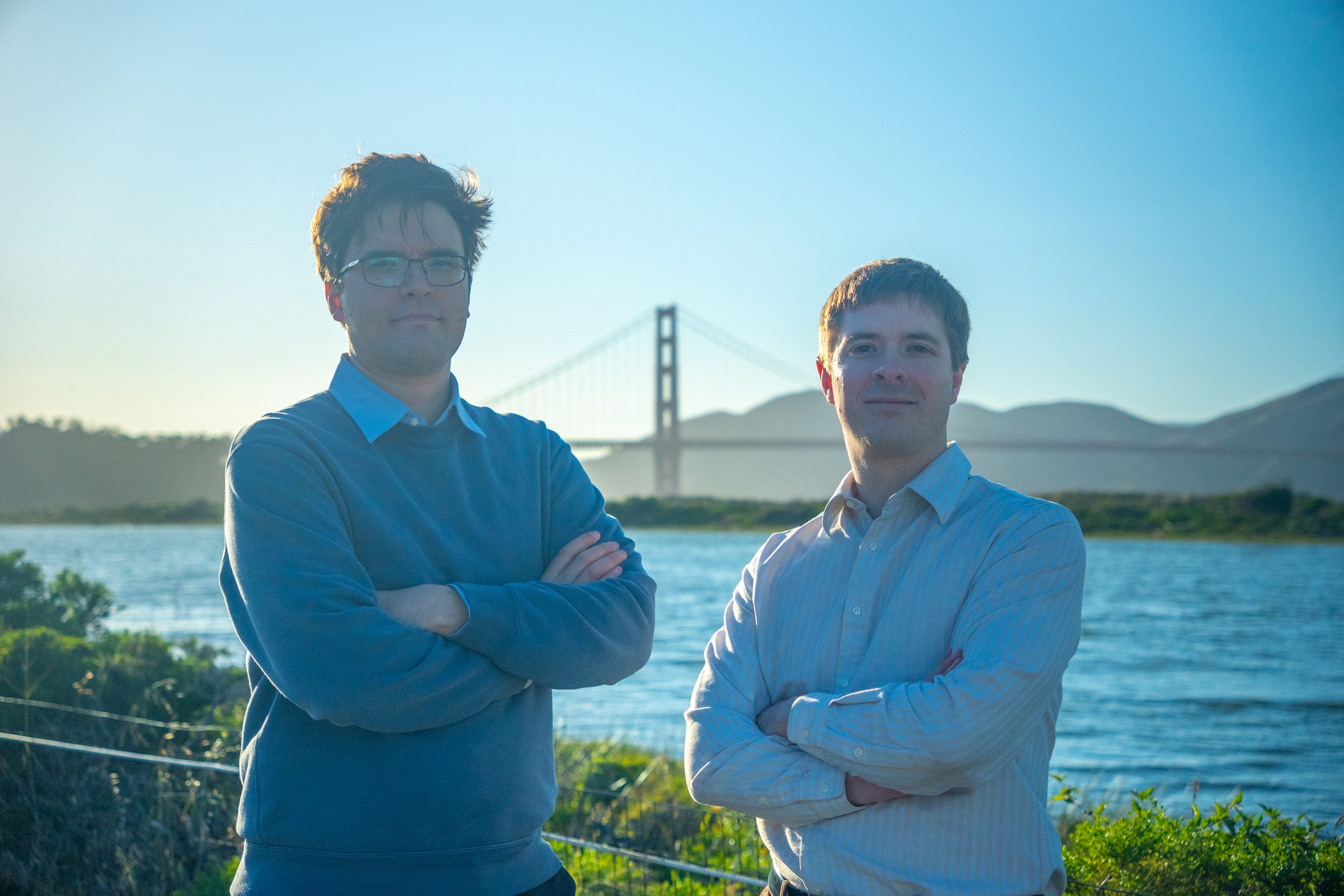
That is the gap Huscarl was built to fill. Founded in 2025, it is an AI-native actuarial advisory firm, enabling self-insurance for corporations throughout the U.S. and Europe, whether via captives or other mechanisms.
Most recently, Huscarl raised $5.6 million USD in seed funding in a round led by FRST, with participation from Y Combinator and Silicon Valley investors. Its CEO Alex Musy spoke to StartupBeat about why companies should price their own risk, and what it would take for self-insurance to become the default rather than the exception.
StartupBeat: Why captives, of all places in insurance?
Alex Musy: As if insurance as an industry was not enough, we did go for one of its more obscure corners. That being said, there’s a huge disconnect between how little attention it gets from the public and how fundamental it is to the insurance industry.
We’ve come to the conclusion that a larger use of self-insurance is probably the only way to solve some of the long-standing problems that have plagued the traditional insurance industry: lack of transparency and fairness of traditional products, and insurers shying away from actually taking risks.
We also feel philosophically drawn to helping companies take more risks. The intimate connection between risk and reward is very well-understood in the finance world, but unfortunately much less when it comes to the insurance industry. The right way to deal with risk is neither to delete it nor be irresponsible with it, but to take it with a crystal clear picture of the ups and downs that go along with it.
SB: Why do you want risk managers to become their company’s “chief underwriting officer”?
AM: The traditional insurance process treats insurance companies as the gatekeepers to the insurer-insured relationship: they’re the ones making an underwriting decision, deciding whether the insured is a sufficiently good risk to be insured and if so, putting a price tag on the risk transfer (the premium). For any other industry, this power imbalance in favor of the seller would be considered an oddity.
We believe this situation is partly derived from the insureds not realizing that there is an alternative to insurance: self-insurance. Insureds question an insurer’s price based on another insurer’s price, but they never do the math of: when is the very fact of insurance not worth it anymore?
That is what we mean by enabling risk managers to become their company’s chief underwriting officer: become the ones who price their risk, and decide whether they should transfer it or not to insurance companies, not the other way around.
SB: What did your first sale teach you about how captive managers and brokers evaluate an AI-driven partner versus a traditional one?
AM: [Captive managers and brokers] rightfully expect the same quality of work from an AI-native partner as they would from a traditional actuarial firm. That is a non-negotiable.
Then, there are several different selling points that make an AI-driven firm especially attractive. The first is cost-effectiveness, which unlocks access to self-insurance for smaller clients and effectively is a business enabler to them. The second is speed; captive creation processes take 6-12 months, and you don’t want the actuary to be the bottleneck to that process.
And finally, there’s advanced modeling techniques. Captives are a great fit to cover emerging risk – think AI-related risks, data centers and natural catastrophes – because traditional insurers don’t cover them well anyway. The issue with those risks is that everyone, actuaries included, lacks historical data to price them. AI-driven modeling techniques are key in making these risks self-insurable.
SB: What was the hardest thing to get early clients to trust about AI-driven actuarial work?
AM: One of the most common questions has been how we deal with data quality issues. Most people probably have in mind potential hallucination issues, but we believe the topic is much broader, and has remained to this day an unsolved problem in traditional actuarial firms.
That is why we put a lot of effort into AI data engineering from the get-go; all of the data we use can be traced back to source documents in one click. We also solved a lot of data quality problems along the way, for example, how do you deal with source documents that are contradicting each other? Not all insurance documents have the same importance, so we now systematically index their “authority”.
We cleared trust concerns when we showed that we aimed not to equal traditional actuarial firms’ standards, but surpass them. The minutiae we go through are only possible with AI; they are not compatible with the cognitive reality of a normal human brain – even an actuary’s – nor their firm’s economic equation.
SB: How do you draw the line between what the AI owns and what a human has to sign off on? Does that line move as the tech matures?
AM: Humans take full responsibility for the entirety of the output of what we produce, through the signature of a credentialed actuary. Whether produced by AI or humans, in the end, all of our outputs are held to actuarial standards and respect them: that is the criterion by which we draw the line.
As our technology matures, we’re moving closer and closer towards 99% automation of the work itself – the responsibility doesn’t move.
SB: What would it take for self-insurance to become the default, even for a company with $10 million USD in revenue?
AM: $10M revenue companies have historically had limited access to self-insurance because of entry costs and the sophistication required to understand a company’s own risks and how self-insurance might be a better alternative.
Our work unlocks both, which is why we also work with them.
That being said, we do not focus exclusively on smaller companies. In fact, our first clients were captives for over $3-billion-revenue companies, and Risk Retention Groups, risk pools gathering multiple companies so they can self-insure and enjoy mutualization at the same time.
In that world, every company’s captive is the first carrier of all of its risks. Those captives then transfer risks deemed unbearable alone to the reinsurance markets – think catastrophic risk – or pool together within reinsurance group captives.
Commercial (re)insurance comes in when it is efficient and pricing actually reflects true risk levels. Since companies are self-insuring to a large extent, they also become more responsible with preventing and reducing their losses.
SB: Congratulations on the $5.6 million USD raise! What will that capital go to first, and what does the next year look like?
AM: Thank you! There are two main goals. On the tech side, we’re building up our core team to expand our actuarial platform’s abilities and reach 99% automation of actuarial work for captives and other forms of self-insurance.
On the commercial side, we want to grow aggressively in the U.S. market, expanding our network of partner captive managers, brokers, accountants and lawyers working in the self-insurance space.
Within a year, we want to work with 10% of the captive managers in the space, and we target all of the U.S., across all lines of insurance.
Featured image: Courtesy of Huscarl